
Introduction: Why This Comparison Matters in 2026
Growing Demand for Wall Panels
Interior wall panel demand has surged over the last few years. For project developers, wholesalers, and importers, the shift toward modular construction and quick installation solutions has made wall panels a preferred option.
Why Buyers Are Comparing WPC and PVC
Two materials dominate this space: Indoor WPC Wall Panel and PVC Panels. Both are widely used, but they serve different purposes. Choosing the wrong one can increase long-term costs or reduce project value—something bulk buyers can’t afford.
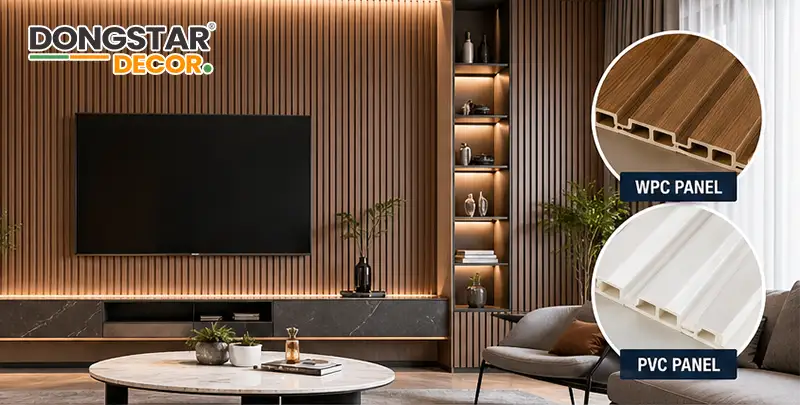
What Is an Indoor WPC Wall Panel?
Composition & Manufacturing
An Indoor WPC Wall Panel is made from a blend of wood fiber and thermoplastics. This hybrid structure gives it the appearance of natural wood while maintaining high durability.
The manufacturing process involves extrusion, ensuring consistent quality—especially important for wholesale buyers.
Key Features
- High strength and rigidity
- Moisture and termite resistance
- Premium wood-like finish
- Suitable for high-end interior projects
What Are PVC Panels?
Composition & Structure
PVC Panels are made entirely from polyvinyl chloride, a lightweight plastic material. They are widely used due to their affordability and ease of installation.
Common Use Cases
- Budget residential interiors
- Temporary installations
- Low-cost renovation projects
Indoor WPC Wall Panel vs PVC Panels: Core Differences
Material Composition
- WPC: Wood + plastic composite
- PVC: Pure plastic
This difference directly affects performance and pricing.
Strength & Durability
WPC panels are significantly stronger and more impact-resistant than PVC panels. For commercial projects or high-traffic areas, WPC is the preferred choice.
PVC panels, while lightweight, can crack or deform under pressure.
Aesthetic Appeal
WPC panels offer:
- Natural wood textures
- Deep embossing
- Premium finish
PVC panels typically have:
- Printed surfaces
- Less realistic textures
For projects targeting premium markets, WPC panels deliver better visual value.
Environmental Impact
WPC panels are often made from recycled materials, making them more eco-friendly. PVC panels, on the other hand, are less sustainable and harder to recycle.
Cost Comparison in 2026
Material Cost
| Material | Price Range (USD/m²) |
|---|---|
| WPC Panels | $15 – $45 |
| PVC Panels | $5 – $20 |
PVC panels are cheaper upfront, making them attractive for low-budget projects.
Installation Cost
WPC panels are slightly heavier but still easy to install. Labor costs are similar, though WPC may require stronger support structures.
Long-Term Value
This is where WPC wins.
- Longer lifespan
- Lower maintenance
- Higher resale value
PVC panels may require replacement sooner, increasing total project cost.
Performance Comparison
Waterproof & Moisture Resistance
Both materials are waterproof, but WPC panels offer better stability in humid environments.
Fire Resistance
WPC panels often meet higher fire safety standards, which is critical for commercial projects.
Maintenance Requirements
- WPC: Minimal maintenance
- PVC: May discolor or warp over time
Applications: Which One Fits Your Project?
Commercial Projects
WPC panels are widely used in:
- Hotels
- Offices
- Retail stores
They provide durability and a premium look—key for branding.
Residential Projects
PVC panels are common in:
- Budget housing
- Rental properties
WPC panels are preferred for:
- Living rooms
- Feature walls
Indoor WPC Wall Panel Supplier vs PVC Panel Supplier
Manufacturing Standards
A reliable indoor WPC wall panel supplier typically offers:
- ISO-certified production
- Strict quality control
- Consistent bulk supply
PVC suppliers may vary significantly in quality.
Customization & OEM
WPC suppliers usually provide:
- Custom colors
- Surface finishes
- Branding options
This flexibility is crucial for wholesalers and importers.
Wholesale Buying Guide
MOQ & Bulk Pricing
- WPC panels: Better pricing at container level
- PVC panels: Lower MOQ but less margin potential
Import & Logistics Considerations
- WPC panels: Higher weight, better durability
- PVC panels: Lightweight but more prone to damage
Market Trends & Buyer Preferences
Global Demand Trends
The demand for WPC panels is rising rapidly due to:
- Sustainability requirements
- Premium interior trends
- Long-term cost advantages
PVC panels remain strong in price-sensitive markets.
Future Outlook
By 2026 and beyond:
- WPC panels will dominate mid-to-high-end markets
- PVC panels will remain in entry-level segments
Common Mistakes Buyers Make
- Choosing PVC panels for high-end projects
- Ignoring long-term maintenance costs
- Not verifying supplier certifications
- Focusing only on initial price
FAQs
1. Which is better: Indoor WPC Wall Panel or PVC Panels?
For durability and premium projects, WPC is better. For low-budget use, PVC is suitable.
2. Are WPC panels worth the higher price?
Yes, due to longer lifespan and lower maintenance.
3. Can PVC panels replace WPC panels?
Only in low-end or temporary applications.
4. What is the lifespan difference?
WPC: 10–20 years; PVC: 5–10 years.
5. Which is better for wholesale business?
WPC panels offer higher margins and long-term demand.
6. How to choose a reliable supplier?
Check certifications, factory capacity, and export experience.
Conclusion
The choice between Indoor WPC Wall Panel and PVC Panels depends on your project goals. For importers, wholesalers, and contractors targeting long-term value and premium markets, WPC panels are the smarter investment. PVC panels still have their place—but mainly in budget-driven projects.