What Is the Difference Between Flexible Stone and Natural Stone?
Stone finishes remain popular in commercial architecture because they create a natural, textured appearance across interior and exterior spaces. However, traditional natural stone is not always the most practical option for modern construction projects.
Flexible stone and natural stone offer different advantages in terms of weight, installation requirements, material cost and design flexibility.
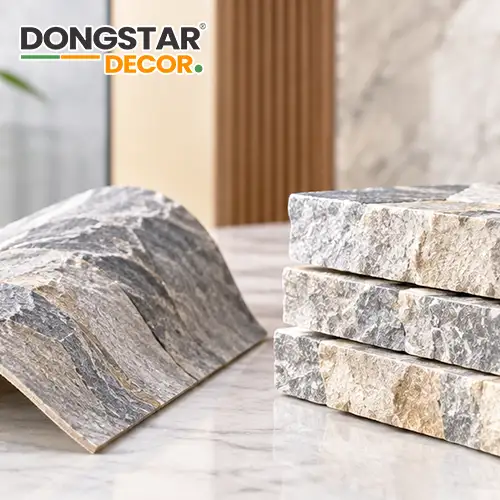
Flexible stone is a lightweight decorative cladding material generally manufactured using mineral-based materials, stone powder or modified clay combined with reinforcing materials and binders. Depending on the product, it is supplied in relatively thin sheets that can reproduce the appearance of natural stone, sandstone, slate, concrete and other architectural finishes.
Natural stone is quarried from natural deposits and processed into slabs, tiles or veneer panels. Common varieties include marble, granite, limestone, slate and sandstone. Each type has its own natural texture, density, colour variation and physical characteristics.
The main difference is that flexible stone is engineered for lightweight surface decoration, while natural stone retains the original physical characteristics of quarried stone.
For commercial buyers, the decision should be based on the project’s design requirements, structural conditions, installation budget and expected service environment.
Flexible Stone vs Natural Stone: Weight Comparison
Weight is one of the most important factors when comparing flexible stone panels with traditional natural stone cladding.
Traditional natural stone can create a considerable dead load on building walls, particularly when thicker slabs are used. Flexible stone is designed to reduce this weight by using a thinner material structure.
Typical product specifications illustrate the difference:
| Comparison | Flexible Stone | Natural Stone |
|---|---|---|
| Material structure | Engineered mineral-based sheet | Quarried stone |
| Typical thickness | Approximately 2–6mm for many thin-sheet products | Commonly 15–30mm for conventional cladding |
| Indicative weight | Approximately 3–8kg/m² for many products | Approximately 40–80kg/m² for many conventional stone cladding systems |
| Flexibility | Flexible to a product-specific bending radius | Generally rigid |
| Wall loading | Relatively low | Relatively high |
| Handling | Easier to transport and handle | Requires more careful lifting and handling |
Note: These figures are indicative market examples, not universal specifications. Actual weight depends on material composition, thickness, backing, stone type and panel format. Always request the manufacturer’s technical data sheet.
Why Does Weight Matter for Commercial Projects?
A lighter wall cladding material can offer several commercial advantages:
Reduces the additional dead load on existing walls.
Makes material handling and transportation easier.
Can simplify installation in renovation projects.
Offers more options for curved surfaces and decorative columns.
May reduce the need for heavy-duty handling equipment.
For high-rise renovation, commercial interiors and projects with weight restrictions, lightweight stone veneer can be worth considering.
However, lightweight materials do not automatically eliminate structural or fire-safety requirements. The complete wall assembly must meet the applicable project standards.
Flexible Stone vs Natural Stone: Cost Comparison
Material price is important, but it should not be the only consideration when calculating the cost of a commercial stone cladding project.
The total installed cost includes material purchasing, transportation, installation labour, substrate preparation, fixing materials, cutting losses and maintenance.
1. Material Purchasing Cost
Flexible stone panels may offer a more economical solution for projects requiring large decorative wall areas, particularly when lightweight materials and simplified installation are priorities.
Natural stone prices vary considerably depending on the stone species, quarry origin, thickness, surface finish, dimensions and quality grade.
Premium marble and granite products can carry significantly higher material costs than standard decorative cladding options.
2. Transportation and Handling Costs
Natural stone is considerably heavier than many flexible stone products.
For international importers and distributors, this difference can influence:
Shipping weight and container loading.
Pallet and packaging requirements.
Unloading equipment.
Warehouse handling.
Transportation to the construction site.
Flexible stone can offer logistics advantages when the selected product has a substantially lower weight per square metre.
3. Installation Labour Costs
Flexible stone is generally installed using compatible adhesives or other manufacturer-approved fixing systems. Natural stone may require adhesive installation, mechanical fixing or additional structural support depending on its dimensions and weight.
This means flexible stone can reduce installation complexity in suitable applications.
4. Total Project Cost
The following comparison summarizes the main cost considerations.
| Cost Factor | Flexible Stone | Natural Stone |
|---|---|---|
| Material cost | Depends on finish and specification | Depends on stone type and grade |
| Shipping | Generally lower for lightweight products | Often higher due to weight |
| Handling | Relatively simple | May require lifting equipment |
| Installation labour | Often lower for suitable systems | Can be higher for heavy panels |
| Supporting structure | Depends on substrate and system | May require additional support |
| Maintenance | Depends on coating and product composition | Depends on stone type and treatment |
Purchasing recommendation: Compare the complete installed cost per square metre rather than comparing material quotations alone. A lower material price does not necessarily mean a lower project cost.
Installation Differences: Flexible Stone vs Natural Stone
Installation requirements are another important difference between these two materials.
Flexible Stone Installation
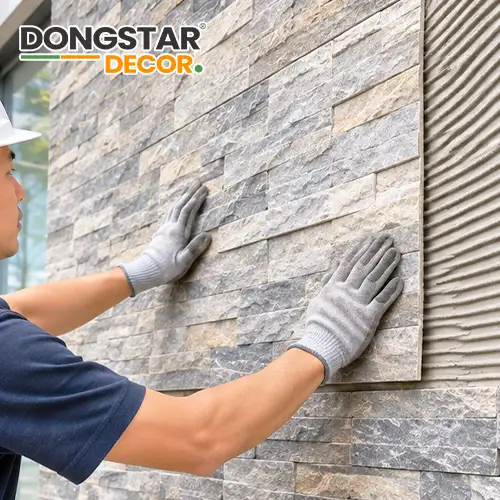
Flexible stone panels are generally installed through an adhesive-based system, although some products may require specialized fixing methods.
A typical installation process includes:
Inspect the wall surface and confirm that it is stable, clean and suitable for bonding.
Prepare and level the substrate according to the product instructions.
Apply the specified primer if required.
Spread the compatible adhesive evenly.
Position the flexible stone panel and press it firmly against the wall.
Adjust panel alignment and joints.
Complete joint treatment, edge finishing and sealing where specified.
Because flexible stone is thin and lightweight, it can be suitable for decorative columns, curved walls and selected renovation applications.
The minimum bending radius, adhesive type and substrate requirements must always be confirmed with the manufacturer.
Natural Stone Installation
Natural stone installation typically requires more consideration of panel weight, thickness and structural support.
Depending on the stone format and application, installation may involve:
Inspecting the substrate and calculating the required load capacity.
Preparing the wall or supporting structure.
Selecting suitable mechanical anchors or stone adhesives.
Cutting and positioning individual stone panels.
Adjusting joints and alignment.
Applying grout, sealant or protective treatment where required.
Large-format natural stone panels may require lifting equipment, additional labour and mechanical fixing systems.
Which Material Is Easier to Install?
For many decorative wall applications, flexible stone is easier to handle and install because of its lightweight construction and thin-sheet format.
Natural stone remains a preferred choice where authentic quarried material, substantial stone thickness or specific architectural details are required.
The correct installation method must always follow the manufacturer’s instructions and local building regulations.
Durability and Applications in Commercial Projects
Both materials can be suitable for commercial construction, but their performance depends on product quality and the installation environment.
Flexible Stone Applications
Flexible stone panels are commonly considered for:
Hotel lobbies and reception walls.
Shopping mall decorative walls.
Office buildings and commercial interiors.
Restaurant and retail interior decoration.
Decorative columns and curved surfaces.
Exhibition halls and hospitality projects.
Selected exterior wall cladding applications using approved products and systems.
Their lightweight structure and range of surface finishes make them useful for projects requiring a natural stone appearance without the weight of conventional stone panels.
Natural Stone Applications
Natural stone is frequently used in:
Luxury hotels and commercial buildings.
Exterior building facades.
Public spaces and landscape architecture.
Premium flooring and wall finishes.
Monumental and architectural projects.
High-end commercial interiors.
Marble, granite, limestone and slate each provide different visual and physical properties.
What About Durability?
Natural stone has a long history of use in architecture, but its performance depends on the specific stone type, porosity, weather resistance and installation system.
Flexible stone performance varies according to its mineral composition, reinforcing materials, binders, surface treatment and manufacturing quality.
Before approving either material for a commercial project, buyers should request relevant test reports covering:
Water absorption.
Bonding strength.
Abrasion and surface resistance.
UV and weather resistance.
Freeze-thaw performance where relevant.
Fire classification.
Dimensional stability.
For exterior applications and high-rise projects, fire performance and complete wall-system compliance should receive particular attention.
Which Is Better for Your Commercial Project?
There is no single material that is suitable for every project. The right choice depends on the balance between appearance, structural requirements, installation conditions and total project cost.
| Project Requirement | Recommended Material |
|---|---|
| Lightweight decorative wall cladding | Flexible Stone |
| Curved walls and decorative columns | Flexible Stone, if bending specifications permit |
| Large areas of lightweight wall decoration | Flexible Stone |
| Authentic quarried stone appearance | Natural Stone |
| Premium marble or granite finishes | Natural Stone |
| Traditional stone facade systems | Natural Stone, subject to structural design |
| Renovation projects with weight restrictions | Flexible Stone, subject to substrate assessment |
| Heavy-duty stone architectural features | Natural Stone |
When Should Buyers Choose Flexible Stone?
Flexible stone is worth considering when the project requires:
Reduced wall cladding weight.
Faster material handling and installation.
Flexible decorative surface designs.
A natural stone appearance with a thinner panel structure.
Lower transportation and handling requirements.
When Should Buyers Choose Natural Stone?
Natural stone is often the better choice when the project requires:
Genuine quarried stone.
Specific natural mineral patterns.
Thick stone slabs or substantial stone details.
Traditional stone construction methods.
A particular natural stone specification required by the architect or project owner.
For wholesalers and importers, offering both types of materials can help meet different project requirements and expand product sourcing opportunities.
How to Choose a Reliable Flexible Stone Supplier
For international importers, product consistency and supplier reliability are essential when sourcing flexible stone panels.
Before placing a bulk order, buyers should evaluate the following factors.
1. Product Composition
Understand the main raw materials, reinforcing structure and manufacturing process. Different production methods can result in different product characteristics.
2. Thickness and Weight
Confirm actual panel thickness, weight per square metre and acceptable production tolerances.
3. Surface Finishes
Check the available stone textures, colours, patterns and finish consistency across production batches.
4. Technical Performance
Request available test reports covering adhesion, water absorption, fire performance, weather resistance and other relevant properties.
5. Installation Compatibility
Confirm suitable adhesives, substrate requirements, bending radius and installation instructions.
6. Export and Production Capability
For wholesale and project orders, evaluate production capacity, quality inspection procedures, packaging, lead times and export experience.
Before approving a large order, it is advisable to request physical samples and review the product specifications against the project’s technical requirements.
Looking for decorative wall cladding solutions for your next project?
Contact the Dongstar team to discuss decorative material sourcing, product specifications and wholesale cooperation for international markets.
Website: https://www.dongstardecor.com/
FAQs About SPC Flooring vs LVT
1. Is flexible stone real stone?
Flexible stone is generally an engineered decorative material made with mineral-based ingredients and reinforcing materials. Its composition varies by manufacturer. Some products use natural mineral or stone powder, but they are not equivalent to solid quarried stone.
2. Is flexible stone lighter than natural stone?
Yes, many flexible stone products are substantially lighter than conventional natural stone cladding. Actual weight depends on panel thickness, material composition and backing structure.
3. How thick are flexible stone panels?
Many thin flexible stone products are approximately 2–6mm thick. Some textured or three-dimensional products are thicker. Buyers should confirm the actual dimensions in the manufacturer’s product specification.
4. Can flexible stone be used on exterior walls?
Some flexible stone products are designed for exterior applications. However, suitability depends on UV resistance, water absorption, freeze-thaw performance, adhesive compatibility and the complete wall system. Always check the relevant technical documentation before specifying exterior use.
5. Is flexible stone cheaper than natural stone?
Flexible stone may reduce transportation, handling and installation costs in suitable applications. However, the actual price difference depends on product quality, finish, order quantity, installation system and project location.
6. Can flexible stone be installed over existing tiles?
Some products can be installed over existing tiles if the surface is firmly bonded, clean, stable and properly prepared. The substrate and adhesive compatibility must be confirmed before installation.
7. What is the difference between flexible stone and stone veneer?
Flexible stone is generally an engineered mineral-based decorative sheet, while natural stone veneer is produced by cutting or splitting genuine quarried stone into thinner pieces. Their composition, weight, flexibility and installation requirements are different.
Conclusion
Flexible stone and natural stone serve different purposes in commercial architecture. Flexible stone offers advantages in weight, handling and decorative flexibility, while natural stone provides authentic geological characteristics and traditional stone construction options.
For global importers, wholesalers and project contractors, the best purchasing decision should consider not only the appearance and material price but also shipping, installation, structural requirements and long-term performance.
Choosing the right material specification and working with a qualified supplier can help improve project efficiency and control overall procurement costs.