Commercial flooring has to do much more than look good.
In a hotel, office, retail store, restaurant, or public building, the floor is exposed to heavy foot traffic, cleaning, rolling loads, moisture, and everyday wear. At the same time, developers and contractors have to control installation time, maintenance costs, and the overall project budget.
This is where SPC Flooring has gained serious attention.
SPC, or Stone Plastic Composite flooring, combines a rigid mineral-polymer core with a decorative surface and protective wear layer. The result is a flooring product that offers the appearance of wood or stone while providing the dimensional stability and moisture resistance needed for many commercial interiors.
For importers and project buyers, however, choosing SPC isn’t simply about finding the cheapest product. The construction of the flooring, wear layer, locking system, test reports, production consistency, and supplier reliability all affect the final result.
So, why is SPC Flooring becoming an increasingly popular option for commercial buildings?
What Is SPC Flooring?
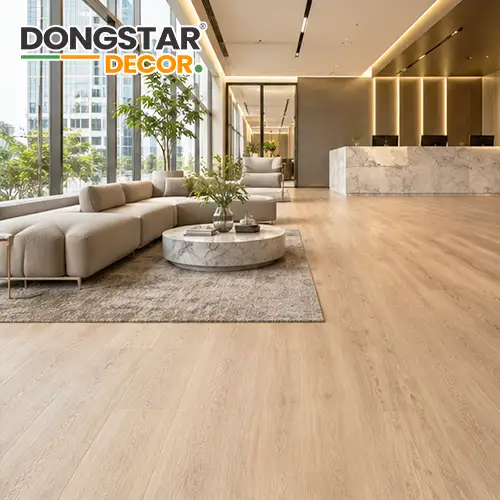
SPC Flooring is a type of rigid-core resilient flooring. Its core typically contains mineral filler and polymer materials, while the surface includes a decorative film and protective wear layer.
Depending on the product, an SPC floor may also include an attached underlayment.
A typical structure consists of:
UV or protective surface treatment
Transparent wear layer
Decorative print layer
SPC rigid core
Attached underlayment, where applicable
This layered construction allows manufacturers to reproduce the appearance of natural oak, walnut, stone, concrete, and other interior finishes.
For commercial buyers, the key point is that not all SPC floors are the same. Thickness, core formulation, wear-layer thickness, locking profile, surface treatment, and testing can vary considerably between products.
Why Commercial Buildings Need Different Flooring
Residential flooring and commercial flooring face different demands.
A private home may have a relatively small number of occupants. A hotel corridor, office entrance, or retail store can experience hundreds or thousands of footsteps every day.
Commercial flooring therefore needs to balance several factors:
Traffic resistance
Moisture performance
Dimensional stability
Cleaning requirements
Installation efficiency
Appearance
Safety
Total project cost
A product that performs well in a bedroom isn’t automatically the best choice for a busy commercial lobby.
That’s why professional buyers should start with the project conditions, rather than starting with a product catalogue.
7 Reasons SPC Flooring Is Gaining Ground in Commercial Projects
1. Strong Moisture Resistance
Moisture is one of the biggest concerns with many traditional flooring materials.
SPC’s rigid mineral-polymer core is highly resistant to water exposure compared with wood-based flooring products.
This makes it attractive for areas such as:
Hotel corridors
Retail stores
Restaurants
Offices
Entrance areas
Hospitality spaces
However, buyers should be careful with the word “waterproof.” The flooring itself may have excellent water resistance, but the complete floor assembly—including joints, subfloor, perimeter details, and installation—still needs to be designed correctly.
2. Designed for Busy Areas
Commercial floors don’t get much time to rest.
Foot traffic, furniture movement, luggage wheels, shopping carts, and routine cleaning all put pressure on the surface.
The wear layer is therefore an important specification when selecting SPC.
A thicker or appropriately specified wear layer can provide better protection against everyday abrasion, but the correct specification depends on the expected traffic and application.
For large projects, don’t simply ask:
“How thick is the floor?”
Ask:
“What is the wear-layer specification and what application is the product designed for?”
That is a much more useful comparison.
3. Faster Installation
Time matters on commercial projects.
Every additional day spent on installation can affect labor costs, handover dates, and other trades working on the same site.
Many SPC products use click-lock installation systems. Depending on the product and site conditions, this can simplify installation and reduce the need for wet adhesives.
For renovation projects, this can be particularly attractive because businesses may need to keep disruption to a minimum.
The important qualification is that the subfloor must still meet the manufacturer’s requirements. SPC is not a solution for an improperly prepared subfloor.
4. Modern Design Without the Look of “Industrial Flooring”
Commercial flooring used to be strongly associated with practical materials.
Today’s clients expect more.
Hotel owners want warmth. Office developers want a premium appearance. Retail brands need flooring that works with their visual identity.
SPC manufacturers can reproduce a wide range of natural-looking surfaces, including:
European oak
Walnut
Smoked wood
Herringbone
Chevron
Concrete
Natural stone
This gives architects more freedom without necessarily choosing solid timber or ceramic tile.
5. Easy Routine Maintenance
Commercial facilities need flooring that cleaning teams can manage efficiently.
SPC generally has a relatively straightforward maintenance routine. Routine care normally involves removing dust and debris, followed by cleaning according to the flooring manufacturer’s recommendations.
For property managers, this matters because maintenance is a recurring cost.
A floor that looks attractive at installation but requires complicated maintenance may not be the best long-term choice.
6. Dimensional Stability
Temperature and humidity changes can cause problems for flooring materials.
SPC’s rigid core provides greater dimensional stability than many traditional wood-based flooring products.
That doesn’t mean installation conditions can be ignored.
Commercial buyers should still review:
Subfloor moisture
Temperature
Expansion requirements
Direct sunlight
Installation area
Manufacturer installation instructions
A good product needs a good installation environment.
7. Competitive Lifecycle Value
The lowest purchase price doesn’t always mean the lowest project cost.
For commercial flooring, the real calculation should include:
Product + shipping + installation + maintenance + replacement risk + project downtime
SPC can offer a strong balance between these factors.
That is one reason it has become increasingly attractive to developers and contractors looking for a practical alternative to more expensive or installation-intensive flooring systems.
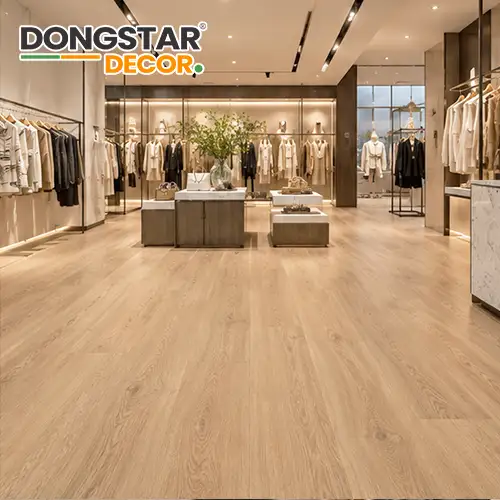
Where Commercial SPC Flooring Works Best
Hotels and Hospitality
Hotels are particularly demanding environments.
Guest rooms, corridors, restaurants, reception areas, and conference spaces all have different traffic levels.
SPC is often considered for:
Guest rooms
Corridors
Hotel apartments
Reception areas
Restaurants
Retail areas within hotels
Natural wood visuals can also help create a warmer hospitality atmosphere.
Offices
Office buildings require flooring that can withstand regular foot traffic while fitting a professional interior.
SPC works particularly well with:
Open-plan offices
Meeting rooms
Reception areas
Corridors
Executive offices
For office renovations, installation efficiency can be an additional advantage.
Retail and Shopping Spaces
Retail floors face frequent foot traffic and constant cleaning.
Visual consistency is also important because flooring forms part of the customer experience.
SPC can provide commercial spaces with a wood or stone appearance while offering a practical rigid-core construction.
Healthcare and Education
Healthcare facilities, schools, and other institutional buildings have their own technical requirements.
Before specifying SPC for these projects, buyers should verify the exact requirements for:
Slip resistance
Fire performance
Indoor air emissions
Cleaning chemicals
Acoustic performance
Hygiene
Local building regulations
A flooring product should never be approved for a regulated application based on a general marketing claim alone.
SPC Flooring vs Other Commercial Flooring
SPC vs LVT
SPC and LVT are closely related resilient flooring products.
The main distinction is the core construction.
SPC has a rigid mineral-polymer core, while traditional LVT products can have more flexible constructions.
SPC is often selected when buyers want:
A rigid feel underfoot
High dimensional stability
Click installation
Strong moisture resistance
LVT may be preferable when flexibility or specific adhesive installation requirements are more important.
SPC vs Laminate
Laminate flooring can provide excellent visual quality and competitive pricing.
However, its wood-based core generally makes moisture management more important.
For commercial spaces where moisture exposure is a concern, SPC can provide a practical advantage.
SPC vs Ceramic Tile
Ceramic tile remains an excellent commercial flooring material, particularly where exceptional hardness and specific wet-area requirements are needed.
But installation can be slower and more labor-intensive, and tile is harder underfoot.
SPC offers a different combination:
Faster installation
Warmer visual appearance
Easier cutting
Wood and stone designs
Resilient underfoot feel
The right choice depends on the building and application rather than a universal ranking.
How to Choose an SPC Floor Supplier
Selecting the right SPC Floor Supplier is just as important as selecting the right flooring specification.
Check the Complete Construction
Don’t purchase based only on total thickness.
Ask for:
Core thickness
Wear-layer thickness
Overall thickness
Plank dimensions
Surface treatment
Underlayment specification
Locking-system details
Two 5 mm SPC floors can perform differently if their internal structures are different.
Request Relevant Test Reports
For commercial projects, documentation is part of the product.
Depending on the market and application, buyers may need information related to:
Fire performance
Slip resistance
Dimensional stability
Wear resistance
VOC or indoor-air emissions
Acoustic properties
The required tests depend on the destination country and project specification.
For European projects, buyers should also verify which standards and regulatory requirements apply to the specific flooring product and intended use.
Evaluate the Factory, Not Just the Catalogue
For bulk buyers, factory capability matters.
Look for evidence of:
Stable production capacity
Consistent raw materials
Automated manufacturing
Quality-control procedures
Export experience
Professional packaging
Reliable lead times
A supplier that can deliver 500 square meters isn’t necessarily equipped to support a distributor ordering several containers every month.
Order Samples Before Bulk Purchasing
A sample allows you to evaluate things that photographs can’t show.
Check:
Color
Surface texture
Plank straightness
Locking quality
Edge finish
Underfoot feel
Print consistency
For a large commercial project, it is also sensible to approve a reference sample before mass production.
Is SPC Flooring Suitable for Large Projects?
Yes, provided the product is correctly specified for the application and the manufacturer can support the required quantity and quality.
For project procurement, buyers should establish the following before placing an order:
Project specification → approved sample → testing/document review → quotation → production schedule → inspection → shipment → installation
This process reduces surprises later.
For distributors and importers, consistency becomes even more important. If the same design is reordered six months later, the new batch should match the approved product as closely as the manufacturer’s agreed tolerances allow.
FAQs
1. How do I find a reliable WPC Wall Panel Manufacturer in China?
Start by checking factory capability, production capacity, product specifications, quality-control procedures, export experience, certifications, samples, and customer references. A live factory video inspection and independent pre-shipment inspection can provide additional confidence.
2. What is the difference between a WPC Wall Panel Manufacturer and a trading company?
A manufacturer controls its own production process, while a trading company may source products from one or more factories. Both can be legitimate, but direct manufacturer relationships can be particularly useful for customized products and large repeat orders.
3. What documents should a WPC Wall Panel Factory provide?
Depending on the product and target market, request a technical datasheet, applicable test reports, fire-performance documentation, installation instructions, warranty information, and relevant conformity documentation.
4. Are China WPC Wall Panels suitable for European projects?
They can be, provided the specific product meets the requirements applicable to its intended use and destination market. For EU construction products, requirements under the Construction Products Regulation and relevant harmonised technical specifications need to be assessed rather than assumed.
5. Should I inspect WPC wall panels before shipment?
For a first order, high-value shipment, or large commercial project, pre-shipment inspection is a sensible risk-control measure. The inspection should verify the agreed specification, quantity, appearance, packaging, and other contractual requirements.
6. Can a Chinese WPC manufacturer produce custom designs?
Many established factories offer OEM and customization services, but capability varies. Ask for examples of previous customized projects and confirm the sample approval and mass-production process before placing the order.
7. How can I compare quotations from different WPC suppliers?
Use the same specification for every supplier. Compare material composition, thickness, dimensions, surface finish, accessories, packaging, MOQ, loading quantity, payment terms, lead time, certifications, and shipping terms—not just the unit price.
8. What is the most important factor when selecting a WPC manufacturer?
For large projects, consistency is arguably more important than the lowest price. A manufacturer that can repeatedly deliver the same quality, specification, quantity, and schedule is usually more valuable than a supplier offering a cheaper but uncertain quotation.
Final Commercial SPC Flooring Buying Checklist
Before approving an SPC Flooring product, check:
Exact product construction confirmed
Wear layer specified
Core and overall thickness confirmed
Approved physical sample available
Relevant test reports reviewed
Installation requirements understood
Subfloor requirements confirmed
Packaging checked
Container loading quantity calculated
Production lead time confirmed
Pre-shipment inspection arranged where appropriate
Warranty terms documented
Supplier export experience verified
Conclusion
SPC Flooring is not becoming popular simply because it is a new flooring trend.
Its appeal comes from a practical combination of durability, moisture resistance, design flexibility, installation efficiency, and lifecycle value.
For commercial developers and contractors, these characteristics can help solve real project problems. For wholesalers and importers, the opportunity is even broader: a well-specified SPC product can serve hospitality, office, retail, and residential-development markets from the same supply chain.
But the product is only half the equation.
The other half is choosing the right SPC Floor Supplier.
A reliable supplier should be able to provide consistent products, appropriate technical documentation, stable production capacity, professional packaging, and dependable delivery. For a large project, those details can matter far more than saving a few cents on the initial quotation.
For buyers looking to source SPC flooring from China, Dongstar Decor can be evaluated as a manufacturing partner based on the actual project specification, required quantity, destination market, and documentation requirements.
The best commercial flooring decision isn’t necessarily the cheapest one. It’s the one that performs reliably after the building opens its doors.
Recommended Reading
- All Posts
- Acoustic Panel
- Blog
- Industry News
- Product Trends
- PS Wall Panel
- PU Stone Panel
- SPC Flooring
- UV Marble Sheet
- WPC Wall Panel
Commercial flooring has to do much more than look good. In a hotel, office, retail store, restaurant, or public building, the floor is exposed to heavy foot traffic, cleaning, rolling...
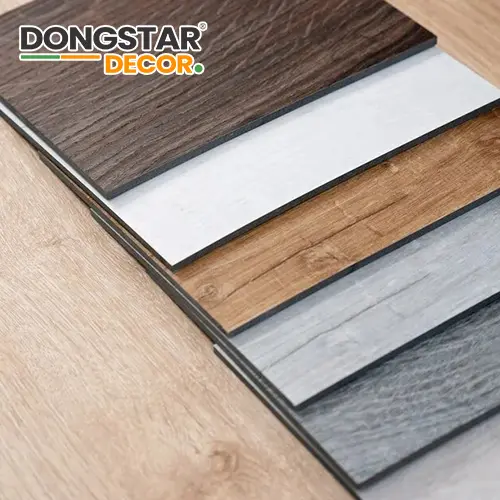
When sourcing SPC Flooring for large-scale projects, thickness is often the first spec buyers compare—but it’s also one of the most misunderstood. Many project buyers assume “thicker is always better.”...
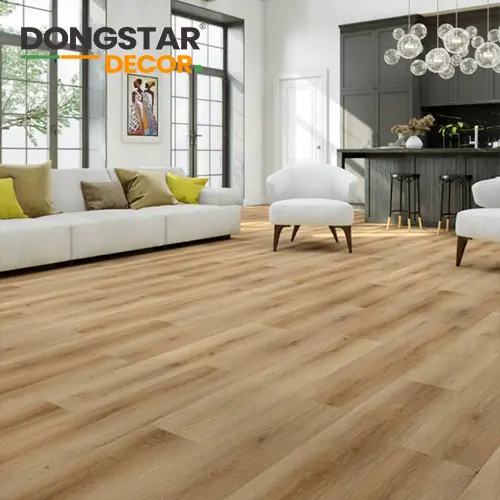
When homeowners or project managers think about flooring options that balance style and endurance, SPC Flooring has rapidly climbed the ranks as a top contender. From sleek visual appeal to...
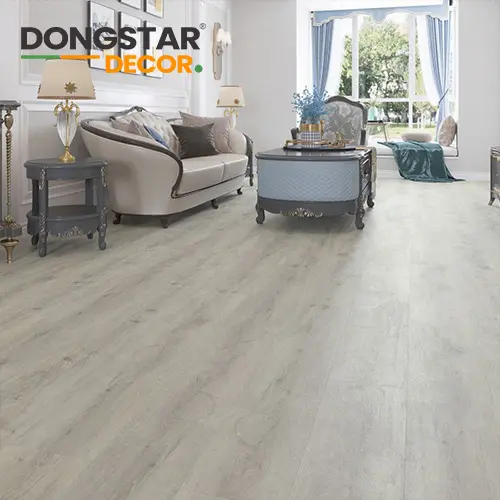
Commercial spaces demand flooring that can withstand heavy traffic, look professional, perform under pressure, and remain cost-efficient in the long run. This is where SPC Flooring stands out. Over the...

Living with pets and kids means your floors face constant challenges. SPC Flooring provides the ultimate defense, combining superior durability with practical benefits. This waterproof flooring solution resists scratches, spills,...
Choosing the right flooring for moisture-prone areas like kitchens, bathrooms, and basements is a critical decision for any homeowner. While many options claim to be “water-resistant,” only a few can...