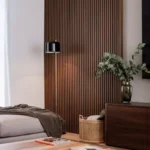
When it comes to managing noise, many people confuse acoustic panels with soundproofing, thinking they serve the same purpose. However, these two solutions address different aspects of noise control.
In this guide, we’ll break down the key differences, their unique benefits, and when to use each for optimal results.
1. How Acoustic Panels Work (Sound Absorption)
Acoustic panels are designed to improve sound quality within a room by reducing echoes and reverberation. They absorb sound waves rather than block them, making them ideal for spaces where clarity is key.
Key Features of Acoustic Panels:
- Porous Materials – Made from foam, fiberglass, or fabric-wrapped mineral wool to trap sound.
- Reduces Echoes – Shortens reverberation time for clearer speech and music.
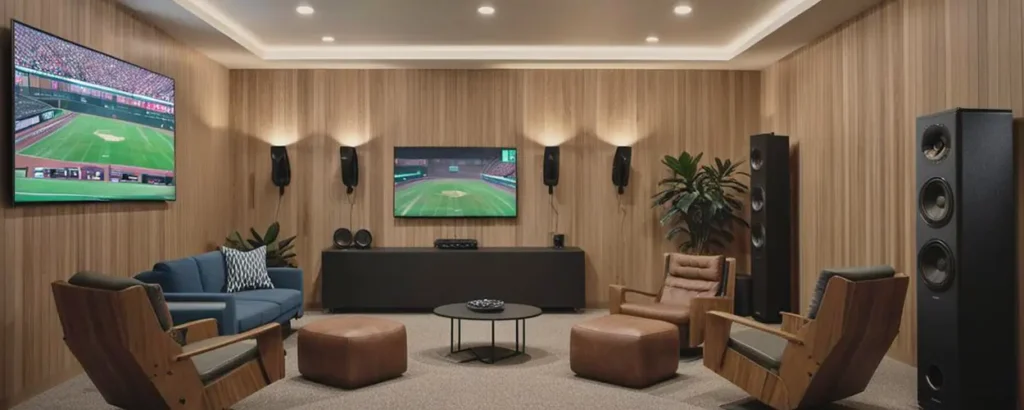
- Common Uses – Recording studios, home theaters, offices, and conference rooms.
2. How Soundproofing Works (Noise Blocking)
Soundproofing, on the other hand, prevents sound from entering or leaving a space by blocking its transmission. Unlike acoustic panels, soundproofing relies on dense, heavy materials to stop sound waves.
Key Features of Soundproofing:
- Mass-Loaded Materials – Uses drywall, insulation, or specialized barriers like mass-loaded vinyl (MLV).
- Decoupling Techniques – Isolates walls/floors to prevent vibrations (e.g., resilient channels).
- Common Uses – Home theaters, bedrooms, apartments, and noisy workplaces.
3. When to Use Acoustic Panels vs. Soundproofing
Use Acoustic Panels If You Need:
1.Better speech/music clarity in a room.
- Reduced echo in home offices or studios.
- Aesthetic sound control (decorative panels).
2.Use Soundproofing If You Need:
- To block external noise (traffic, neighbors).
- Privacy between rooms (e.g., home theaters, bedrooms).
- Compliance with noise regulations (commercial spaces).
Combined Solutions:
For the best results, many spaces (like recording studios) use both—soundproofing to block outside noise and acoustic panels to control internal reflections.
Combined Solutions:
For the best results, many spaces (like recording studios) use both—soundproofing to block outside noise and acoustic panels to control internal reflections.
Understanding the difference between acoustic panels and soundproofing ensures you choose the right solution for your needs. While acoustic panels enhance sound quality, soundproofing keeps noise in or out. For complete noise control, some projects benefit from both!
Need professional advice? Contact us for customized acoustic solutions tailored to your space!